Why Your Heater Smells When You Turn It On (and When to Worry)
As the first cold front rolls into San Antonio, thousands of homeowners flip their heaters on for the first time in months — and suddenly notice a burning smell coming from their vents. Don’t panic: this is one of the most common HVAC questions each fall. Here’s what’s normal, what’s not, and how to keep your system safe and efficient this heating season.
Why You Smell Burning When the Heater First Turns On
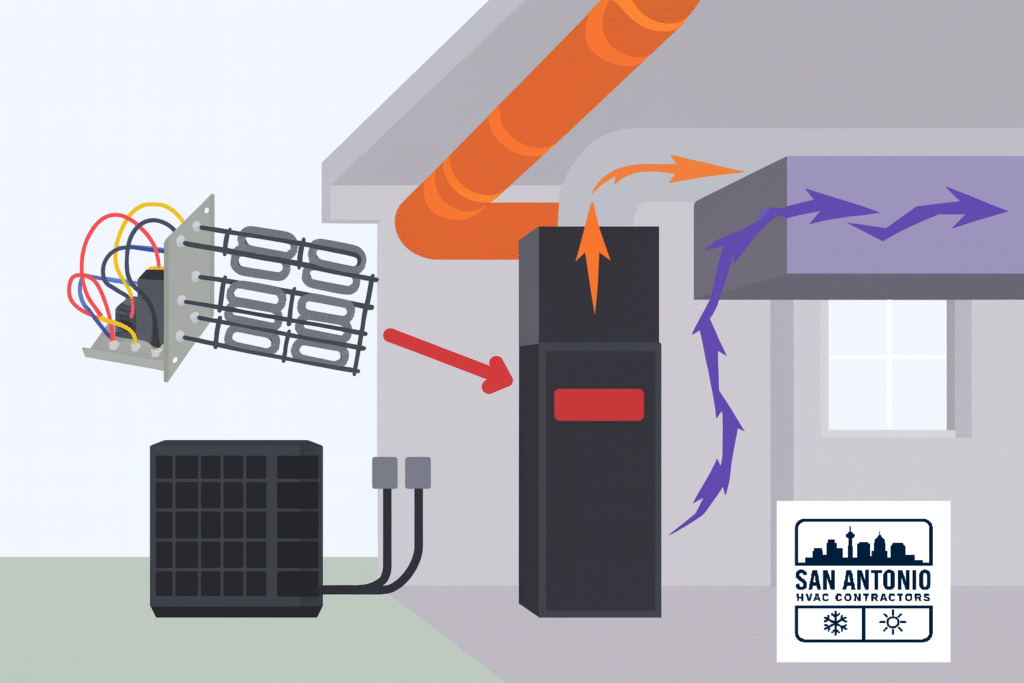
During the long San Antonio summer, your furnace or air handler sits idle, collecting dust on heating elements, burners, and inside the ductwork. When you finally power it on, that layer of dust burns off as the system heats up. The result? A temporary “burning dust” odor that usually lasts for the first few heating cycles.
- Dust on heating coils: The most common cause of the smell — harmless, but indicates it’s time for a seasonal cleaning.
- Dirty air filter: A clogged filter can trap dust and debris, which then heats up and causes odors to circulate.
- Long idle periods: Systems unused for 6+ months often produce a stronger initial smell as accumulated particles burn away.
This odor typically fades within an hour or two. Opening windows slightly can help the smell dissipate faster.
When the Smell Could Mean Trouble
While the “dust burn-off” smell is normal, certain odors should raise concern. You’ll want to turn off your system and call an HVAC professional if you notice any of the following:
- Electrical burning or plastic smell: Could indicate wiring issues, overheating motors, or a failing blower capacitor.
- Rotten eggs or sulfur odor: A possible natural gas leak — exit the home immediately and call your gas company.
- Smoky or metallic odor: May signal that internal components are overheating, especially if combined with unusual noises or poor airflow.
- Persistent burning smell for over a day: Dust burn-off shouldn’t linger that long; something else could be wrong.
If you’re unsure, it’s always safer to shut off your furnace and schedule an inspection with a licensed San Antonio HVAC technician.
How to Prevent Heater Smells Before Winter
Routine HVAC maintenance in the fall prevents most odor issues before they start. Here’s a quick checklist:
- Replace or clean your air filters before running the heat.
- Schedule a professional tune-up to clean burners, inspect wiring, and calibrate safety controls.
- Vacuum around vents and registers to remove built-up dust.
- Test carbon monoxide detectors and replace batteries.
- Run the system briefly on a mild day before the first cold front hits — this helps burn off dust when you can still open windows.
Homeowners who stay proactive save money on repairs and breathe cleaner air all winter long.
San Antonio’s “Dust Season” — Why It Matters
Because San Antonio’s climate is humid and warm for most of the year, furnaces often sit unused for 8–9 months. This makes our city especially prone to season-start furnace smells. The first cold snap — typically in late October or November — causes a massive spike in local searches for “heater smells like burning” and “furnace smell dust.” Having your system serviced before that rush ensures comfort, safety, and peace of mind.
Frequently Asked Questions
How long should the smell last?
For most homeowners, the burning dust smell should fade within a few hours or after one or two full heating cycles. If it continues beyond 24 hours, it’s time to check your air filter and possibly schedule a service visit.
Is it safe to run the heater when it smells?
Yes — as long as the smell is mild and fades quickly. Keep an eye (and nose) out for any sharp electrical or smoky odors, which are warning signs. Always have a carbon monoxide detector installed and functioning properly for added safety.
When to Call a Professional
If your system emits a strong or ongoing odor, shuts off unexpectedly, or trips the breaker, contact a professional HVAC technician. A qualified expert can identify whether the issue stems from electrical components, dust buildup, or potential gas leaks.